Ashmaad
The Ripple Content Library: Cryptocurrency and Fintech
If you want to understand how blockchain is changing global finance, the Ripple content library is one of the best free resources available today. It is not a blog. It is a growing collection of reports, whitepapers, videos, guides, infographics, and case studies that cover real topics affecting real money movement around the world.
This article walks you through what the library contains, who it is for, and why the research inside it matters for anyone following cryptocurrency and fintech.
What Is the Ripple Content Library?
Ripple is a San Francisco based fintech company founded in 2012. Its goal from day one was to make money move the way information moves on the internet: instantly, globally, and at almost no cost.
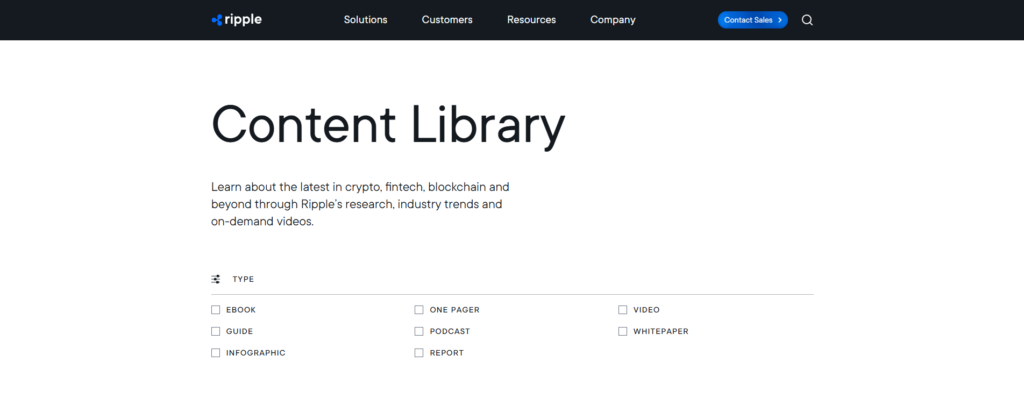
The Ripple content library is hosted on ripple.com and is free to access. It organises its resources into clear content types including reports, whitepapers, ebooks, guides, infographics, videos, podcasts, and one pagers. You do not need an account to browse, though some downloads ask for an email.
The library covers topics such as cross border payments, stablecoins, digital asset custody, tokenisation of financial assets, and central bank digital currencies (CBDCs).
What Types of Resources Are in the Library?
Reports
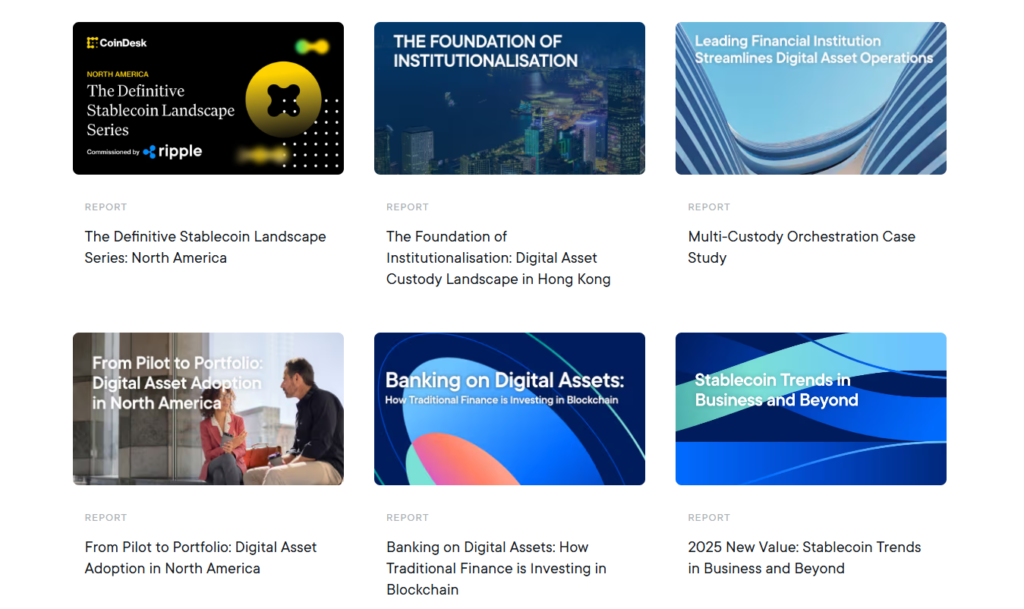
These are the most detailed pieces in the library. Recent examples include a report on stablecoin trends in business titled “2025 New Value: Stablecoin Trends in Business and Beyond” and a report on digital asset adoption in North America called “From Pilot to Portfolio.”
These reports pull from surveys of financial institutions, payment companies, and banks, giving you data that is hard to find anywhere else for free.
Whitepapers
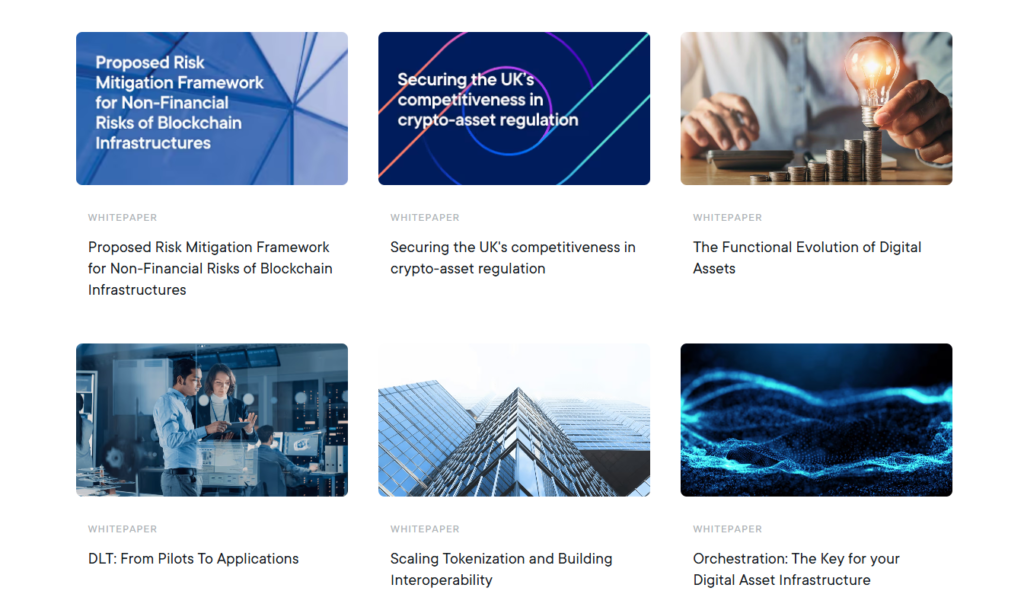
Whitepapers go deep on specific technical or policy topics. One recent example examines a proposed risk mitigation framework for blockchain infrastructure, published alongside the Global Blockchain Business Council. Another focuses on how the UK can stay competitive in crypto asset regulation.
These are worth reading if you work in compliance, policy, or financial technology.
Case Studies
Ripple publishes case studies from real customers. These are not marketing pieces. They show specific numbers: how much faster a payment settled, how much liquidity was freed up, what the cost difference was versus a traditional bank transfer.
Guides and Infographics
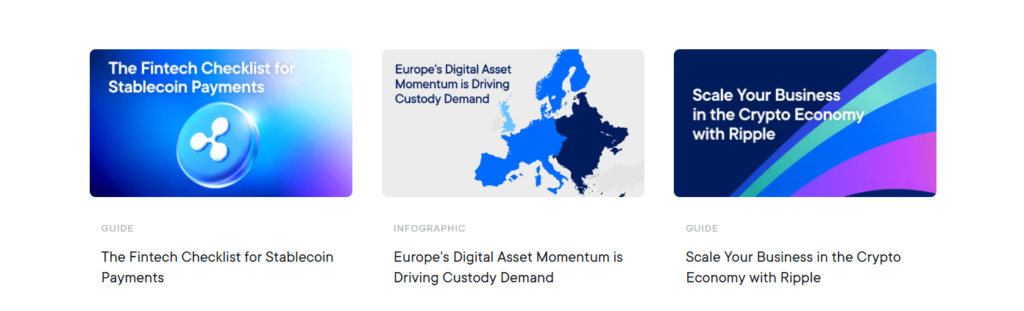
For people newer to the space, the library also includes shorter pieces like a fintech checklist for stablecoin payments and infographics on digital asset custody demand in Europe.
Why Does This Library Matter?
Read an article about Financial Assets by “wealthbuilding” here.
The Problem With Traditional Payments
Sending money across borders through traditional banking is slow and expensive. A SWIFT transfer can take one to five days and cost between $10 and $50 per transaction, plus a forex spread on top. Every bank in the chain needs to verify the payment, which adds time and cost.
Ripple’s technology removes most of those steps. Its On Demand Liquidity (ODL) service converts a sender’s currency into XRP, moves it across the XRP Ledger in seconds, and converts it to the recipient’s currency on the other side. The transaction fee is a fraction of a cent.
For a business paying overseas suppliers or a worker sending money home to family, this is a meaningful difference.
Real Banks Are Already Using It
This is not theoretical. According to recent research, over 300 banks have partnered with Ripple’s network. SBI Remit in Japan has used Ripple since 2017 for transfers to the Philippines. Axis Bank in India was the first bank to go live on Ripple’s network. Zand Bank in the UAE began using Ripple Payments for cross border transfers in 2025 after Ripple received a Dubai license.
Deutsche Bank is integrating Ripple linked technology to modernise its cross border payments and foreign exchange settlement. Standard Chartered in Thailand uses Ripple’s On Demand Liquidity for real time low cost remittances.
The library documents these real use cases in detail, which makes it useful reading even if you are not a Ripple customer.
Stablecoins Are a Growing Focus
Ripple launched its own stablecoin called RLUSD, backed one to one by US dollar reserves. It runs on both the XRP Ledger and Ethereum. The library includes dedicated reports on how stablecoins are being adopted by businesses and what the regulatory landscape looks like in different regions.
With stablecoins becoming a bigger part of how money moves online, the research Ripple publishes is among the most current available.
Who Should Use the Ripple Content Library?
The library is useful for several types of readers.
Fintech professionals will find the case studies and reports directly relevant to how payment infrastructure is evolving. The data on settlement times, cost reduction, and liquidity management is practical.
Crypto investors and traders who follow XRP will get a clearer picture of where Ripple is expanding and what institutional adoption looks like on the ground. If you want to understand XRP beyond the price chart, the library explains the actual use case behind the token. You can also follow expert analysis from top traders on platforms like Vocal Media to combine market insight with the fundamentals Ripple publishes.
Regulators and policy researchers will find the whitepapers on CBDC implementation and crypto regulation worth reading. Ripple has worked with the government of Palau and the Saudi Central Bank, among others.
Developers building on the XRP Ledger can use the library alongside the official XRP Ledger documentation to understand the business context behind the technology they are building on.
How the Library Connects to Broader Tech Trends
Ripple is not just a payments company. It sits at the intersection of several major technology shifts happening right now.
Artificial intelligence is beginning to play a role in cross border payment routing and fraud detection. Ripple has discussed using AI to improve liquidity management, which connects the world of blockchain finance directly to the AI tools reshaping every other industry.
If you are curious about how AI is changing technology broadly, our piece on the best LLM tools to use in 2026 gives useful context on where AI capabilities currently stand.
Tokenisation is another area the library covers. In July 2025, Ripple announced a partnership with the Dubai Land Department to tokenise real estate on the XRP Ledger, enabling fractional ownership and digital property deeds. This is a sign of how blockchain is moving from payments into asset ownership itself.
How to Get the Most Out of the Library
Start with the most recent annual report. It gives you a snapshot of where adoption stands and what topics Ripple considers most important for that year.
Then pick one content type that matches your background. If you are technical, go to the whitepapers or if you work in business, start with the case studies. If you want a quick overview, the infographics take under five minutes to read.
The library updates regularly. Subscribing to Ripple’s newsletter through the library page means new research lands in your inbox without you having to check back manually.
Final Thoughts
The Ripple content library is one of the most practical free resources in the cryptocurrency and fintech space. It is not written for hype. It is written for people who want to understand how money is actually moving in 2025 and 2026, who is using blockchain infrastructure at scale, and what the research says about where things are heading.
Whether you are building a product, making investment decisions, working in policy, or simply trying to understand what XRP actually does, the library gives you primary source material that is hard to find elsewhere.
Visit it at ripple.com